
The Top 5 Bodybuilders with the Biggest Shoulders in the World
Secrets to Cannonball Delts
In the world of bodybuilding, shoulders aren't just another muscle group—they're the foundation of that iconic V-taper, the wide, imposing frame that separates the pros from the amateurs. Massive delts can make a physique look unstoppable, like a walking suit of armor. But building shoulders that rival boulders takes more than just lifting; it demands brutal intensity, smart programming, and a diet that fuels growth like a freight train. Based on expert opinions, contest histories, and fan consensus, here are the top 5 bodybuilders who've etched their names in iron with the biggest, most impressive shoulders ever seen on stage. We'll dive into their stories, how they sculpted those delts, their go-to workouts, and the eating habits that powered their gains. Get ready to be inspired—and maybe hit the gym right after.
1. Markus Rühl: The German Freak with Shoulders Wider Than a Doorway
Markus Rühl, often called "The Freak," exploded onto the IFBB scene in the late '90s and early 2000s with a physique that screamed mass monster. Standing at 5'10" and tipping the scales over 280 pounds onstage, his shoulders were legendary for their sheer width and 3D pop, making even Olympia winners look narrow by comparison. Rühl never clinched the Sandow, but his delts are frequently hailed as the biggest in history, thanks to genetics amplified by relentless heavy lifting.
How He Built Them: Rühl's philosophy was simple: go heavy or go home. He prioritized compound presses to pack on size, followed by isolation moves for detail. Consistency was key—he trained shoulders once a week but hit them with insane volume and intensity, often using partial reps and forced reps to push past failure. His off-season bulking allowed him to lift monstrous weights, building that cartoonish thickness.

Shoulder Workout Routine:
- Dumbbell Shoulder Press: 5 sets of 4-16 reps (pyramiding up in weight)
- Upright Rows: 5 sets of 8-10 reps
- Dumbbell Lateral Raises: 5 sets of 8-10 reps
- Dumbbell Shrugs: 5 sets of 6-12 reps
- Bent-Over Lateral Raises: 4 sets of 10-12 reps
Food Habits: Rühl's diet was all about volume—up to 7,000 calories daily to support his massive frame. He focused on clean, whole foods eaten every 2-3 hours: lean meats like chicken, beef, turkey, and eggs for protein (around 500-600g per day), paired with carbs from rice, potatoes, and fish. No fancy shakes or cheats; it was repetitive and disciplined, emphasizing recovery fuel over flavor.
2. Kevin Levrone: The Maryland Muscle Machine's Aesthetic Cannonballs
Kevin Levrone, the "Uncrowned King," competed in over 60 pro shows and placed second at the Olympia four times. At 5'9" and 240-260 pounds, his shoulders weren't just big—they had that perfect roundness and striations that popped under stage lights, blending size with aesthetics. His delts gave him an edge in poses like the most muscular, where they overshadowed even his legendary chest.
How He Built Them: Levrone was a master of heavy compounds mixed with high-intensity techniques like supersets and drop sets. He trained shoulders twice a week during peaks, focusing on full range of motion and mind-muscle connection to hit all three delt heads. His comeback in 2016 at age 51 showed his delts still held that signature fullness, proving his methods stood the test of time.

Shoulder Workout Routine:
- Barbell Shrugs: 4 sets of 8-10 reps
- Behind-the-Neck Smith Machine Press: 4 sets of 6-8 reps
- Dumbbell Front Raises: 4 sets of 8-10 reps
- Dumbbell Lateral Raises: 4 sets of 8-10 reps
- Rear Delt Machine Flyes: 4 sets of 8-10 reps (often supersetted with laterals)
Food Habits: Levrone's diet was spartan—no seasonings, sauces, or variety to avoid any bloat. He ate 7 pounds of flounder daily during prep (about 4kg of fish total), with rice and broccoli for carbs and fiber. Off-season included oatmeal, egg whites, chicken, tuna, and beef. He prioritized purity, doing fasted cardio and sticking to 6-7 meals a day, even if it meant force-feeding for growth.
3. Ronnie Coleman: The King's Heavyweight Delt Dominance
Ronnie Coleman, the eight-time Mr. Olympia (1998-2005), is bodybuilding royalty. At 5'11" and 300 pounds off-season, his shoulders contributed to his unbeatable mass, creating that barn-door width that crushed competitors. His delts were thick from every angle, a testament to his powerlifting roots as a former cop who deadlifted 800 pounds.
How He Built Them: "Light weight, baby!" was his mantra, but Ronnie lifted heavy—think 250-pound dumbbell presses. He trained shoulders once a week with pyramid sets, ramping up to max effort while maintaining form. His intensity was unmatched; he'd push through pain for that pump, combining free weights and machines for balanced development.
Shoulder Workout Routine:
- Seated Military Press (Barbell or Smith): 4 sets of 10-12 reps
- Side Lateral Raises: 4 sets of 10-12 reps
- Dumbbell Front Raises: 4 sets of 10-12 reps
- Bent-Over Rear Delt Raises: 4 sets of 10-12 reps
- Dumbbell or Barbell Shrugs: 4 sets of 10-12 reps
Food Habits: Ronnie consumed 600 grams of protein daily, year-round—whether prepping or bulking at 6,000 calories. Staples included chicken, lean beef, turkey, eggs, oatmeal, grits, potatoes, rice, and beans. No veggies or fish; it was all about high-protein, carb-heavy meals every 2-3 hours to fuel his legendary workouts and recovery.
4. Dennis Wolf: The Big Bad Wolf's Wide, Flowing Delts
Dennis Wolf, the 2014 Arnold Classic champ, brought a unique blend of size and symmetry from Germany. At 6'0" and 280 pounds, his shoulders created an illusion of even greater width due to his tiny waist, making his V-taper one of the best ever. His delts had that capped, flowing look that judges loved.
How He Built Them: Wolf emphasized giant sets and supersets for endurance and pump, training shoulders after chest or in isolation. He focused on lateral raises for width and rear delts for balance, using moderate weights with perfect form to avoid injury. His training evolved with coach Milos Sarcev, incorporating blood-flow restriction for insane vascularity.

Shoulder Workout Routine:
- Machine Shoulder Press: 3 sets of 10-12 reps
- Dumbbell Lateral Raises: 3 sets of 10-12 reps
- One-Arm Cable Lateral Raises: 2 sets of 10-12 reps per arm
- Front Dumbbell Raises: 3 sets of 10-12 reps
- Rear Delt Flyes: 3 sets of 10-12 reps (often in giant sets)
Food Habits: Wolf's diet was balanced for sustained energy—5-6 meals with proteins, carbs, and fats. Off-season: Protein shakes with oatmeal and banana, chicken or beef with rice/potatoes, eggs, and veggies. He hit 300-400g protein daily, even post-retirement, avoiding overeating but prioritizing quality sources like lean meats and shakes for recovery.
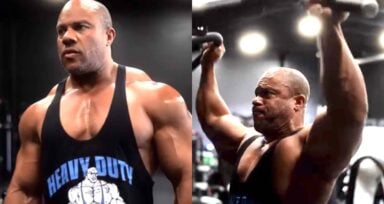
5. Phil Heath: The Gift's 3D Delts That Won Seven Olympias
Phil Heath, the seven-time Mr. Olympia (2011-2017), redefined modern bodybuilding with his polished, grainy physique. At 5'9" and 250 pounds, his shoulders had that 3D separation and roundness that made him untouchable in side poses. His delts complemented his arms and chest, creating a seamless flow.
How He Built Them: Heath mixed heavy presses with high-rep isolation for hypertrophy, training shoulders twice weekly. He stressed rear delts for balance and used techniques like partials and holds for peak contraction. His trainer Hany Rambod's FST-7 system (high-volume finishers) added that extra pop.
Shoulder Workout Routine:
- Smith Machine Military Press: 3 sets of 8-10 reps
- Dumbbell Lateral Raises: 3 sets of 10-20 reps (varying schemes)
- Machine Rear Delt Raises: 3 sets of 12-15 reps
- Front Plate Raises: 3 sets of 12-15 reps
- Barbell or Dumbbell Shrugs: 3 sets of 12-15 reps
Food Habits: Off-season, Heath packed in 5,000 calories with 400g protein and 600g carbs. Favorites: sirloin steak, salmon (up to 1 pound daily), chicken breast, egg whites, oatmeal, cream of wheat, rice, and broccoli. Meals were clean and timed, with sugar alternatives for flavor, ensuring steady gains without excess fat.
These titans didn't just lift weights—they lived the lifestyle, turning pain into progress and meals into muscle. Whether you're a beginner or seasoned lifter, take a page from their books: prioritize heavy compounds, hit all delt heads, and fuel up consistently. Who knows? With dedication, your shoulders could be next on the list. Yeah, buddy!
Shoulder Injury Prevention Tips: Keep Your Delts Healthy and Strong
The shoulder is one of the most mobile joints in the body, but that mobility comes at a cost—it's also one of the most injury-prone, especially for weightlifters and bodybuilders. Common issues like rotator cuff tears, impingement syndrome, labral tears, tendonitis, and strains often stem from overuse, poor form, heavy overhead lifts, or muscle imbalances. Studies show shoulder injuries affect up to 36-46% of lifters annually. The good news? Most are preventable with smart training habits. Here are proven tips to protect your shoulders while building those cannonball delts.
1. Prioritize Proper Form and Technique
Bad form is the #1 culprit behind shoulder pain. Always focus on controlled movements.
- Tuck elbows slightly on bench presses (avoid flaring them out wide).
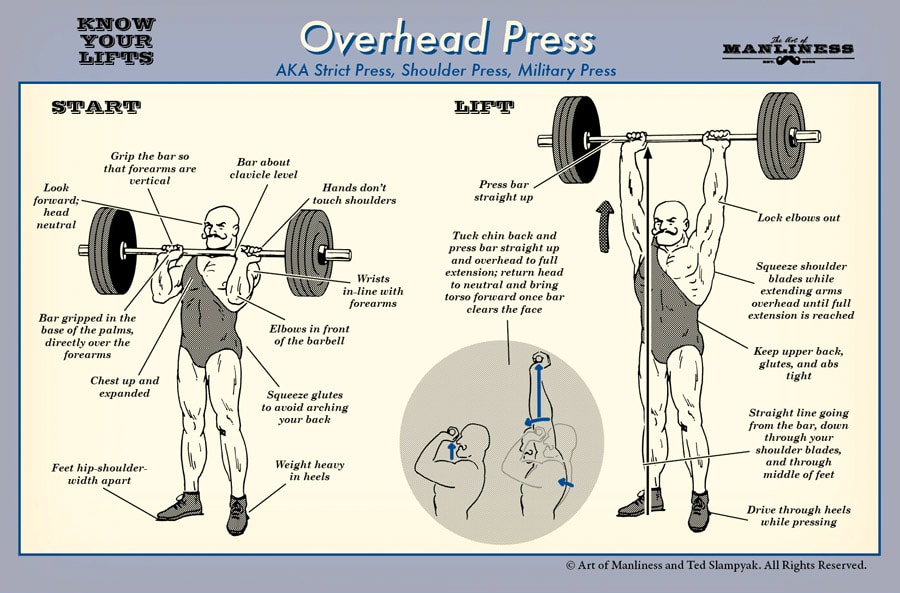
- For overhead presses, keep the bar path straight and core braced—avoid arching your back excessively.
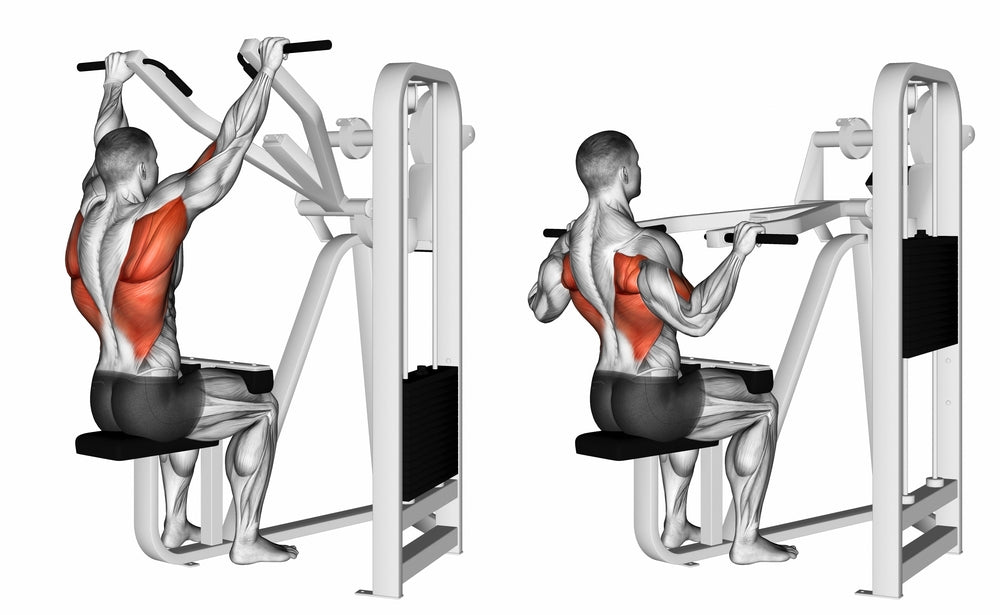
- Skip risky moves like behind-the-neck presses or pull-downs, which stress the joint unnaturally.

2. Warm Up Thoroughly Every Session
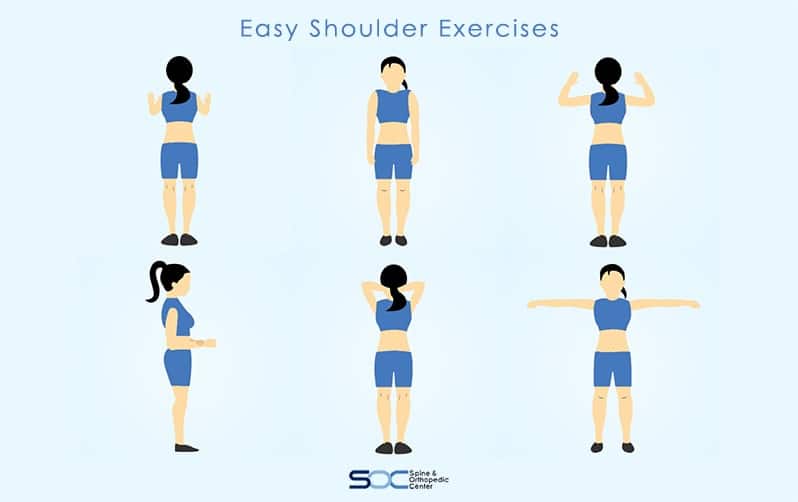
Cold shoulders are injury magnets. Spend 8-10 minutes on dynamic warm-ups to increase blood flow and mobility.
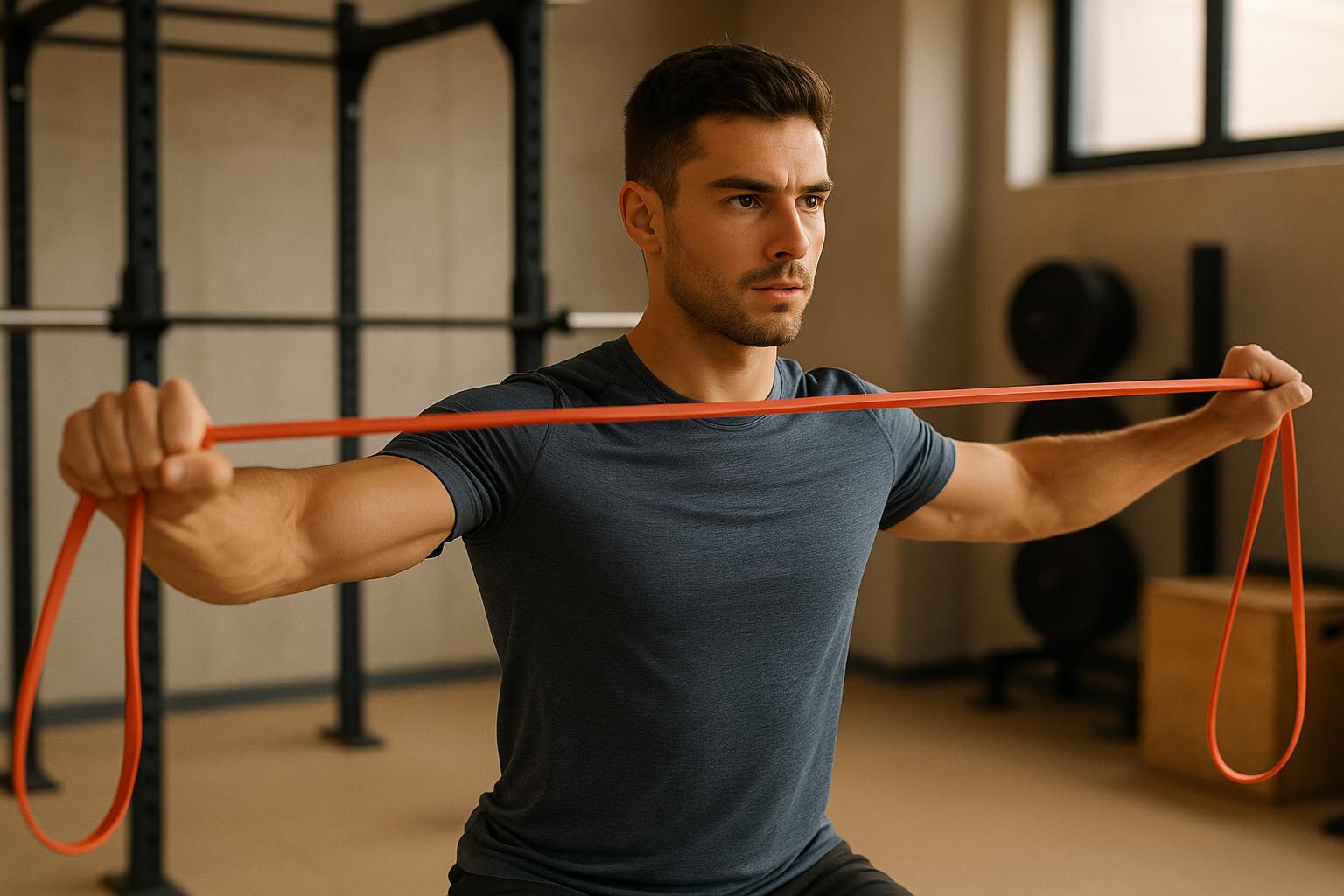
- Arm circles, band pull-aparts, and light dumbbell rotations.
- Foam rolling the upper back and lats to improve posture and scapular movement.
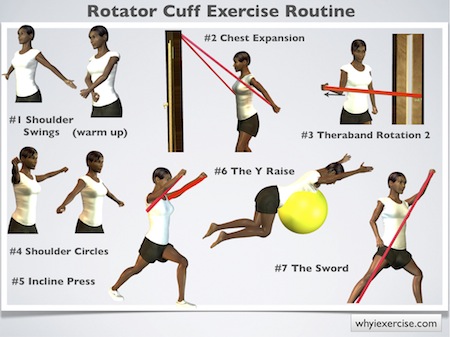
3. Strengthen the Rotator Cuff and Scapular Stabilizers
Weak rotator cuff muscles lead to instability and impingement. Add these prehab exercises 2-3 times per week with light weights or bands (3 sets of 10-15 reps).
- External Rotations: Side-lying or standing with a band—key for balancing internal rotation from pressing.
- Internal Rotations: Similar but opposite direction.
- Face Pulls: Pull a cable or band to your face to hit rear delts and upper back.
- Y-Raises or Prone Trap Raises: Lie face down and lift arms in a Y shape for lower traps.
These build resilience against common tears and imbalances.


4. Balance Your Training: More Pulling Than Pushing
Most lifters overdo presses and benches, neglecting back work. Aim for a 2:1 pull-to-push ratio (e.g., rows, pull-ups, face pulls).
- This strengthens rear delts, rhomboids, and traps for better posture and shoulder stability.
5. Progressive Overload Smartly and Allow Recovery
Don't ego-lift—heavy weights with poor form wreck shoulders.
- Increase weight gradually (5-10% at a time).
- Avoid training shoulders daily; give 48+ hours recovery.
- Incorporate deload weeks every 4-6 weeks.
6. Listen to Your Body and Seek Help Early
Pain isn't "no pain, no gain." Sharp pain, weakness, or swelling means stop and rest.
- Use RICE (Rest, Ice, Compression, Elevation) initially.
- Consult a physical therapist or coach for personalized fixes—programs like the Oslo Sports Trauma Research Center protocol have proven effective in reducing risks.


Strong, healthy shoulders let you train harder and longer. Incorporate these habits, and you'll minimize downtime while maximizing gains. Stay safe in the gym











No comments:
If you have any drought, please let me know. I have attached so many health tips and bodybuilding tips for you which is really informative. So, you are requested to visit healthbestfit.com and share my website including all post as more as possible.